+86-15916242887 


As global trade keeps evolving, the need for reliable Lan Transformers is really picking up. I recently saw a report from Statista that projects this market could hit around $5 billion by 2025 — mainly because of more industrial automation and renewable energy projects popping up everywhere. Big players like Siemens and ABB are leading the charge, rolling out innovative solutions to suit all kinds of needs.
You know, Dr. Emily Chang, a seasoned electrical engineering expert, really stresses how important quality is in this game. She’s said, “A sturdy Lan Transformer is crucial for keeping things running efficiently and safely,” which honestly makes sense. Pick the wrong one, and it could cause all sorts of issues down the line.
That said, there are still quite a few hurdles to jump over. Importers have to deal with tricky regulations and ever-changing market demands. Building solid partnerships with suppliers who keep up with tech advancements is super important. Investing in good quality Lan Transformers sounds like a no-brainer, but it’s definitely worth taking the time to vet suppliers properly. When you choose wisely, it’s not just about getting things done—you’re also making sure everything stays compliant with global standards and runs smoothly in the long run.

Lan Transformers play a critical role in modern telecommunications. They ensure reliable signal transmission and reduce interference. For global importers, selecting the right Lan Transformer is vital. These components enhance data integrity in various applications. A recent industry report states that the demand for 2.5g Base-Lan Transformers is on the rise. This increase reflects the growing need for high-speed internet connections and network efficiency.
Understanding the specifications of Lan Transformers can be challenging. Importers often face issues with compatibility and sourcing. Many transformers are designed for specific network requirements. It's essential toevaluate the technical data before purchasing. Consider the voltage ratings and installation environment. The right choice can significantly impact overall system performance.
Tips: Always verify the certifications of transformers. Look for compliance with industry standards. This step ensures compatibility and reliability. Regularly assess your supply chain for new components that meet emerging technological needs.
When selecting Lan Transformers, attention to key features is crucial. Core material is one of the main considerations. The quality of the core affects efficiency and performance. Good core materials can enhance the magnetic performance. This choice impacts power loss and signal integrity over distance. Using high-quality materials can mitigate these issues.
Additionally, check the winding techniques.
The insulation levels also play a significant role. Proper insulation ensures safety and longevity. It prevents electrical breakdown, especially in high-voltage situations. Look for specifications on temperature ratings. This is essential for reliability under varying conditions.
Another aspect is the size and footprint. Compact designs can save space in crowded setups, yet they must not compromise performance.
Poe Lan Magnetics is an area where attention to design can lead to improved capabilities. However, the trade-offs between size, cost, and performance often require careful evaluation. Users must weigh these factors based on their specific needs. This process can be complex yet necessary for achieving optimal results.
Each decision can lead to better system reliability or introduce new challenges. Careful consideration of these elements leads to better choices for LAN solutions.
When it comes to Lan Transformers, various types cater to global importers' needs. These transformers ensure reliable signal transmission and help reduce electromagnetic interference. Importers must understand these types to make informed decisions.
One common type is the Isolation Transformer. It separates the power source from the load, improving safety. Additionally, these transformers help maintain signal integrity. Another option is the step-down transformer. It reduces voltage levels, making it suitable for specific applications in different regions. This is crucial for compatibility with local standards.
Moreover, Auto Transformers are gaining traction. They are compact and efficient, providing voltage conversion without the need for a separate winding. However, they may pose safety risks in certain settings. It's essential for importers to assess their individual requirements. Proper evaluation leads to better choices in transformer solutions. The consequences of a poor choice can be significant, impacting performance and safety.
| Transformer Type | Primary Voltage (V) | Secondary Voltage (V) | Power Rating (VA) | Frequency (Hz) | Application |
|---|---|---|---|---|---|
| Isolated Transformer | 220 | 110 | 500 | 50/60 | Commercial Equipment |
| Step-Down Transformer | 480 | 240 | 1000 | 60 | Industrial Machinery |
| Step-Up Transformer | 230 | 400 | 750 | 50 | Power Generation |
| Autotransformer | 220 | 220 | 300 | 60 | Voltage Regulation |
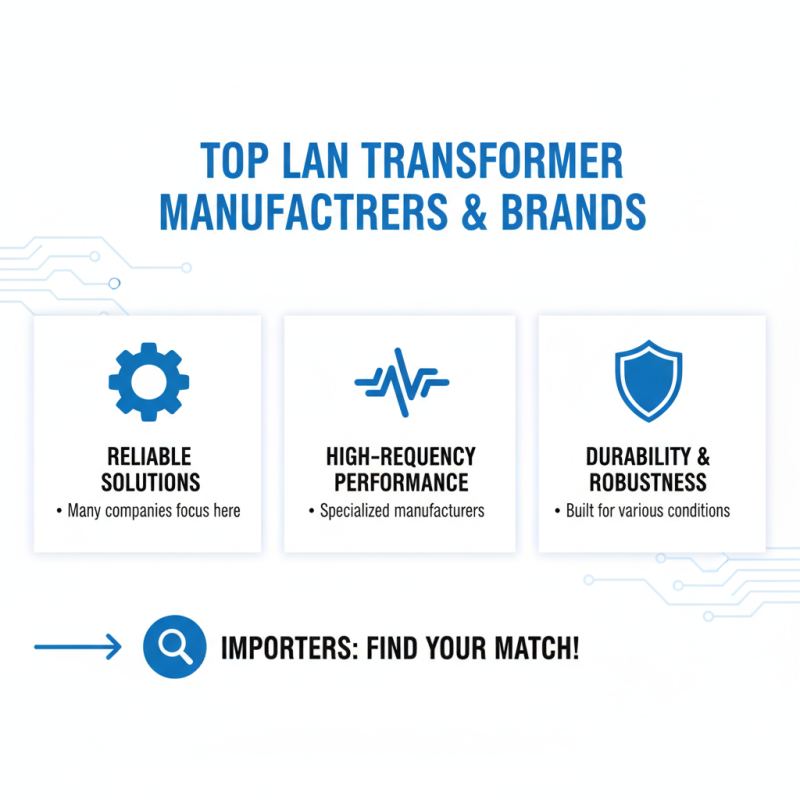
When selecting LAN transformers, understanding the top manufacturers is crucial. Many companies focus on providing reliable solutions. Some specialize in high-frequency performance. Others offer durability under various conditions. This diversity ensures that importers can find a suitable match.
Renowned brands in this space often emphasize Rf Transformers. Their designs aim to optimize signal integrity. Quality control measures are crucial in this industry. Many manufacturers implement rigorous testing processes. This leads to consistent performance throughout their product range. Some brands may prioritize cost over quality. This approach can affect long-term reliability.
As global demand for LAN connectivity rises, so does the need for innovation. Manufacturers are exploring new materials and technologies. This ongoing development can lead to better efficiency and effectiveness. However, it also presents challenges. Not every innovation translates to performance gains. Importers must weigh these factors when choosing a brand. Balancing cost, performance, and reliability is vital in this evolving market.
LAN transformers play a vital role in various industries, especially in telecommunications and automotive sectors. They help in signal integrity and isolation, ensuring optimal performance of devices. According to a recent market research report, the global LAN transformer market is projected to reach $1.3 billion by 2025, reflecting a significant growth rate.
In telecommunications, LAN transformers are crucial for network reliability. They prevent electromagnetic interference, which can distort signals. This interference can slow down data transfer rates. A report indicates that businesses lose up to 20% productivity due to poorly functioning technology.
In the automotive industry, these transformers are essential for in-vehicle communication systems. They offer isolation and protection against voltage spikes. As vehicles integrate more electronics, the demand for efficient LAN transformers is increasing. Research suggests that miscommunication in automotive systems can lead to safety risks. Investing in quality LAN transformers is therefore critical for both function and safety.
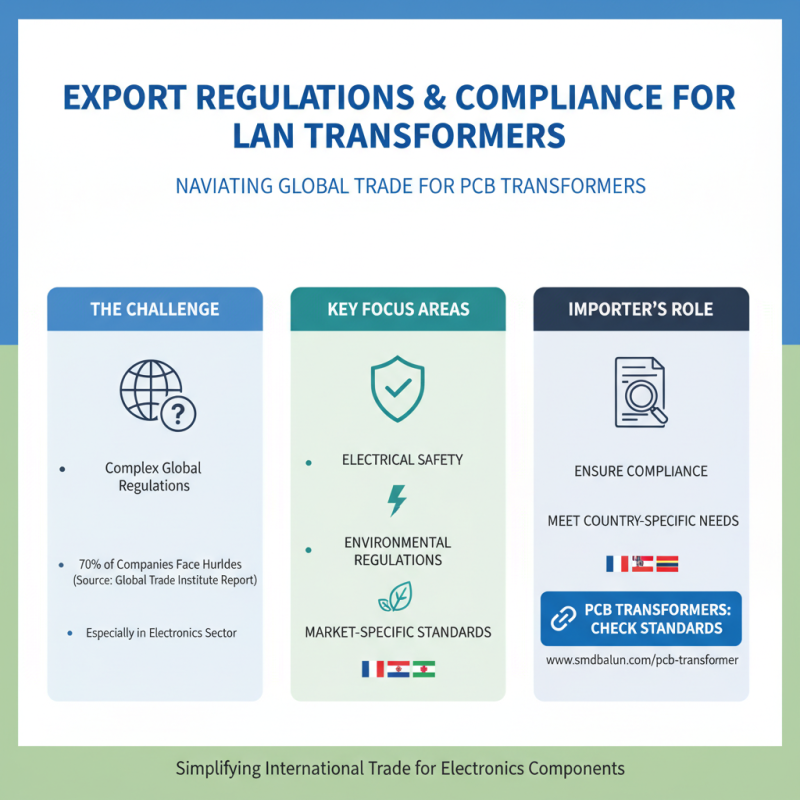
Exporting LAN transformers involves navigating a complex landscape of regulations and compliance. According to a report by the Global Trade Institute, nearly 70% of companies encounter regulatory challenges during international transactions. This complexity is especially evident in the electronics sector, where safety standards vary significantly between markets. Importers must ensure their Pcb Transformers meet the specific requirements of each country, including electrical safety and environmental regulations.
Compliance isn't just about meeting safety standards. It's also crucial to keep up with documentation requirements. A study by the International Electrotechnical Commission highlights that over 30% of shipments face delays due to incomplete paperwork. Each country’s customs has unique documentation needs. Therefore, understanding the local regulations is essential. Knowledge of tariffs, import duties, and other fiscal policies can significantly impact costs.
Many importers overlook the importance of supplier audits. A significant percentage of transformer defects may stem from unvetted manufacturing practices. This becomes a crucial part of ensuring quality compliance. Importers should reflect on how these variables affect their supply chain. Continuous assessment and updates are vital for maintaining compliance and protecting your business interests.
Global sourcing of LAN transformers requires a strategic approach. It's essential to understand the specific needs of your project. Identifying the correct specifications is a priority. This includes assessing input voltage, output requirements, and load capacities. Make sure to create a detailed checklist to guide your sourcing process.
Building relationships with suppliers is crucial. Communication should be clear and consistent. Discuss your technical needs openly. Look for suppliers with a strong industry reputation. Request samples to evaluate quality. This step can save potential future headaches.
Quality assurance should never be overlooked. Develop a set of criteria for evaluating products. Consider manufacturing practices and standards used by suppliers. It's important to remain flexible yet persistent in negotiations. Be prepared to reassess your requirements as you learn more. This reflective approach can forecast future sourcing challenges, helping you avoid common pitfalls in global importing.
N transformers?
They enhance data integrity, impacting network efficiency and performance in various applications.
Evaluate voltage ratings, installation environment, and ensure compatibility with your network requirements.
It can distort signals and slow down data transfer rates, leading to productivity losses.
Understand specific project needs and create a checklist for assessing input voltage and output requirements.
Develop evaluation criteria for products and consider manufacturing practices used by suppliers.
Clear and consistent communication helps address technical needs and establishes strong relationships.
Miscommunication can lead to safety risks, especially as vehicles integrate more electronics.
Samples allow you to evaluate quality, helping to avoid potential issues in the future.
Be flexible yet persistent, ready to reassess requirements as you learn more about the process.
LAN transformers are crucial components for global importers, enabling efficient signal transmission and isolation in networking systems. Understanding their importance involves considering key features such as impedance matching, frequency response, and isolation voltage. Importers must evaluate different types of LAN transformers, which cater to various applications across industries, from telecommunications to automotive.
When sourcing LAN transformers, it is essential to be aware of export regulations and compliance standards that govern these components. Adopting best practices for sourcing and importing ensures that businesses can effectively navigate the complexities of the global market while meeting operational needs. By focusing on reputable manufacturers and understanding the common applications, importers can make informed decisions that enhance their network infrastructures.